
Child Custody & Visitation Lawyers in Queens - Protect Your Parental Rights
Connect with experienced custody attorneys who understand Queens County Family Court
Astoria • Flushing • Jamaica • Forest Hills • Long Island City • Bayside • Woodside • Jackson Heights • Sunnyside
Get Matched with a Custody AttorneyUnderstanding Child Custody in New York
Child custody in New York involves two distinct types of custody: legal custody (decision-making authority about your child's upbringing) and physical custody (where your child lives). Understanding the difference is critical to protecting your parental rights.
Queens County Family Court judges make custody determinations based on the best interests of the child, considering factors like each parent's ability to provide care, the child's relationship with each parent, stability of home environments, and the child's ties to Queens schools and communities.
Why Queens Expertise Matters
Queens Family Court has its own judges, procedures, and local practices. Attorneys familiar with the Jamaica courthouse understand how local judges interpret custody law and can navigate the specific requirements of Queens County proceedings.
Protecting Children's Best Interests + Your Rights
While the court's focus is on what's best for your child, protecting your parental rights is essential. Experienced custody attorneys understand how to present evidence that demonstrates both your child's needs and your ability to meet them.

Types of Custody Matters We Handle
Queens custody attorneys handle various custody arrangements and disputes

Legal Custody
Decision-making authority for your child's welfare, including education, healthcare, religious upbringing, and extracurricular activities. Legal custody can be sole (one parent decides) or joint (parents share decision-making).
Education: School choice, special education services, extracurricular activities - important in Queens with diverse school districts
Healthcare: Medical treatment decisions, choice of doctors and healthcare facilities in Queens
Religion & Activities: Religious education and participation in cultural or community activities

Physical Custody
Where your child lives day-to-day. Physical custody arrangements determine your child's primary residence and can be structured as sole custody, joint custody, or primary residential custody with visitation.
Sole Physical Custody: Child lives primarily with one parent; other parent has visitation rights
Joint Physical Custody: Child splits time between both parents' homes, considering Queens neighborhoods, schools, and commute times
Local Considerations: School zones, NYC transit access, and neighborhood stability in Queens

Visitation Rights
Parenting time schedules and arrangements ensuring the non-custodial parent maintains a meaningful relationship with the child. Visitation schedules must consider work schedules, school commitments, and practical logistics unique to Queens families.
Weekend & Weekday Schedules: Regular parenting time including overnights and midweek visits
Holidays & Summer: Holiday rotation, school breaks, and summer vacation schedules
Queens Logistics: Accommodating NYC work schedules, transit options, and coordination between Queens neighborhoods
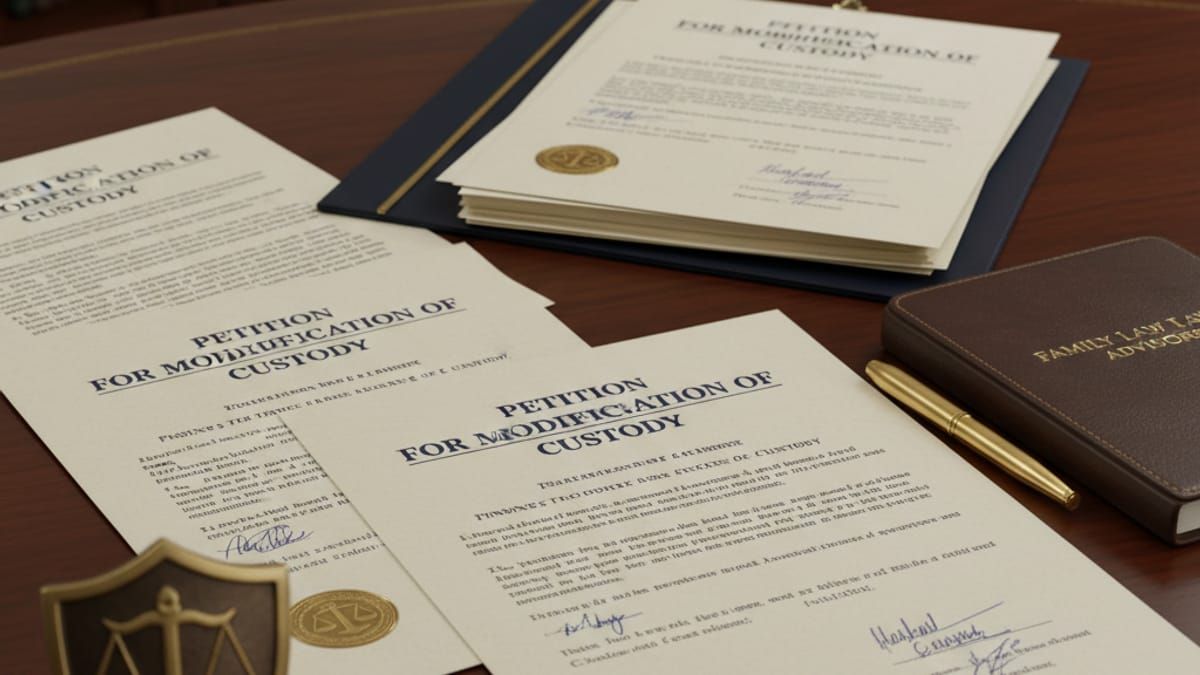
Custody Modifications
Changing existing custody orders when circumstances have substantially changed. Modifications require demonstrating that a change is in the child's best interests and that circumstances differ significantly from when the original order was issued.
Relocation: When a parent needs to move within or outside Queens or New York State
Changed Circumstances: Job changes, remarriage, health issues, or other significant life events
Local Expertise: Filing modification petitions in Queens Family Court with proper documentation
The Custody Process in Queens Family Court
Understanding what to expect when navigating custody proceedings at 89-17 Sutphin Blvd in Jamaica
Filing the Custody Petition
Custody petitions are filed at Queens Family Court (89-17 Sutphin Blvd, Jamaica, NY 11435). The petition must state the type of custody requested and the reasons why it's in the child's best interests. Proper filing with all required documentation is essential for the case to proceed.
Temporary Custody Orders
In urgent situations or while the case is pending, the court may issue temporary custody orders. These establish interim arrangements for where the child will live and parenting time schedules until a final determination is made. Emergency orders can be obtained when there are immediate safety concerns.
Court Investigations
The court may appoint a law guardian (attorney for the child) to represent the child's interests and provide recommendations to the judge. In some cases, the court orders home studies or forensic evaluations to assess each parent's home environment and ability to care for the child. These investigations provide the judge with detailed information about the family situation.
Mediation (If Applicable)
Queens Family Court may refer parents to custody mediation programs to help reach agreements outside of trial. Mediation can be faster and less adversarial than litigation. However, mediation is not appropriate in all cases, particularly where domestic violence is a factor.
Trial (If Needed)
If parents cannot reach an agreement, the case proceeds to trial before a Queens Family Court judge. Each side presents evidence, witness testimony, and arguments supporting their custody position. The judge makes determinations based on the evidence and the child's best interests. Experienced attorneys familiar with Queens judges understand how to present compelling cases.
Final Custody Order
The court issues a final custody order determining legal custody, physical custody, and a detailed parenting time schedule. This order is legally binding and enforceable. It remains in effect unless circumstances change substantially and a modification is granted.
Enforcement & Compliance
If one parent violates the custody order, the other parent can file a violation petition with Queens Family Court. The court has enforcement mechanisms including contempt proceedings. Ensuring compliance with custody orders protects your parenting time and your child's stability.

Best Interests of the Child Standard
Queens Family Court judges make custody determinations based on what's in the best interests of the child. This is the guiding legal standard in all custody cases.
Parent-Child Relationships
The quality and strength of each parent's relationship with the child, including emotional bonds and involvement in the child's daily life
Ability to Provide Care
Each parent's capacity to meet the child's physical, emotional, educational, and developmental needs
Stability of Home Environments
The stability, safety, and suitability of each parent's home, including living conditions and household members
School & Community Ties in Queens
The child's connections to their current school, friends, and Queens neighborhood - continuity is valued
Child's Age & Developmental Needs
Age-appropriate needs and, for older children, the child's preferences (though judges aren't bound by them)
Domestic Violence History
Any history of domestic violence or abuse is a significant factor in custody determinations
Willingness to Foster Relationship
Each parent's willingness to encourage and facilitate a positive relationship between the child and the other parent
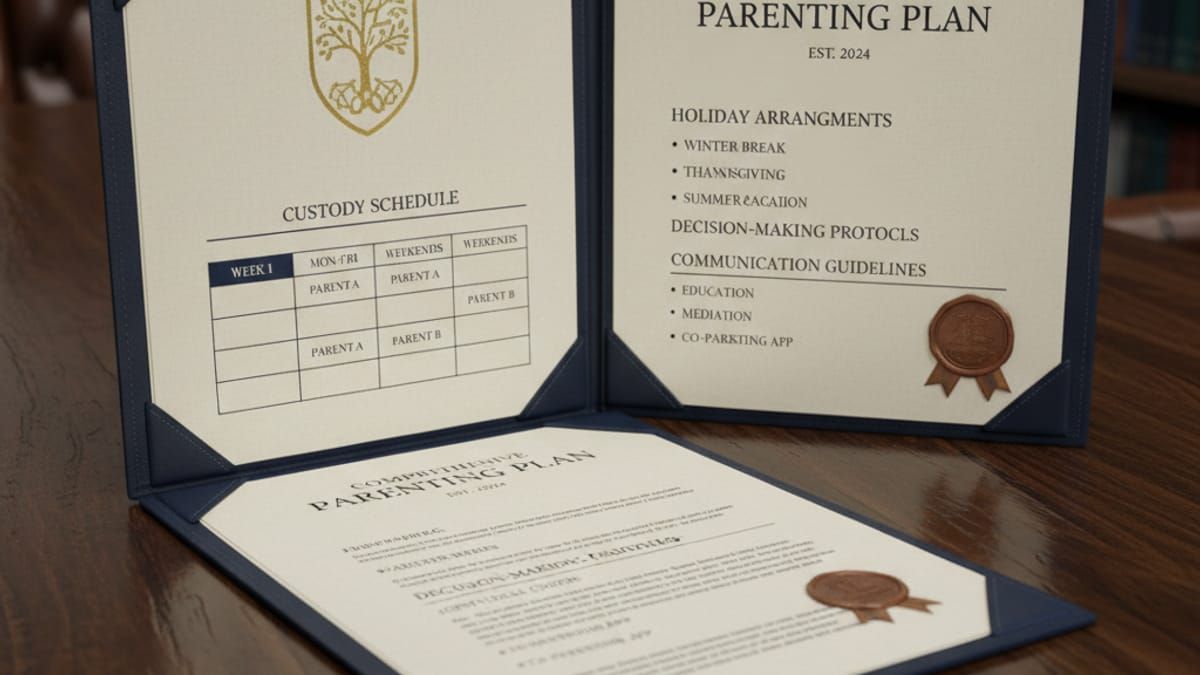
Comprehensive Parenting Plans
A well-drafted parenting plan provides clarity and reduces future conflicts. It should address all aspects of raising your child across two households.
Regular Custody Schedule
Day-to-day parenting time schedule including weekdays, weekends, and overnight arrangements
Holiday & Vacation Schedules
Detailed plans for major holidays, school breaks, summer vacation, and special occasions
Transportation Arrangements
Who transports the child for exchanges, pickup/dropoff locations, and procedures considering Queens geography
Communication Protocols
How parents communicate about the child, emergency contacts, and how the child communicates with the other parent
Decision-Making Procedures
How major decisions about education, healthcare, and activities are made, especially when parents disagree
Conflict Resolution Methods
Mechanisms for resolving disputes without returning to court, such as mediation or parenting coordinators
Common Custody Issues
Complex custody matters that often require legal guidance
Relocation
When a parent wants to move outside of Queens or New York State with the child, court approval is typically required. Relocation cases involve complex legal standards and require demonstrating the move is in the child's best interests.
Grandparent Rights
Grandparents may seek visitation or, in some circumstances, custody of their grandchildren. New York law allows grandparents to petition for rights when parents have passed away, one parent is absent, or under other specific circumstances.
Domestic Violence Concerns
When domestic violence is present, the court takes protective measures including supervised visitation, orders of protection, and safety protocols. Protecting children from exposure to violence is a paramount concern in custody determinations.
Substance Abuse
Concerns about a parent's substance abuse can significantly impact custody and visitation. The court may order drug/alcohol testing, treatment programs, or supervised parenting time to protect the child's welfare.
Parental Alienation
When one parent attempts to damage the child's relationship with the other parent through manipulation or interference. Courts take parental alienation seriously as it harms children and can impact custody arrangements.
Special Needs Children
Children with physical, developmental, or emotional special needs require custody arrangements that address their unique circumstances, including specialized care, therapy schedules, educational services, and medical needs.
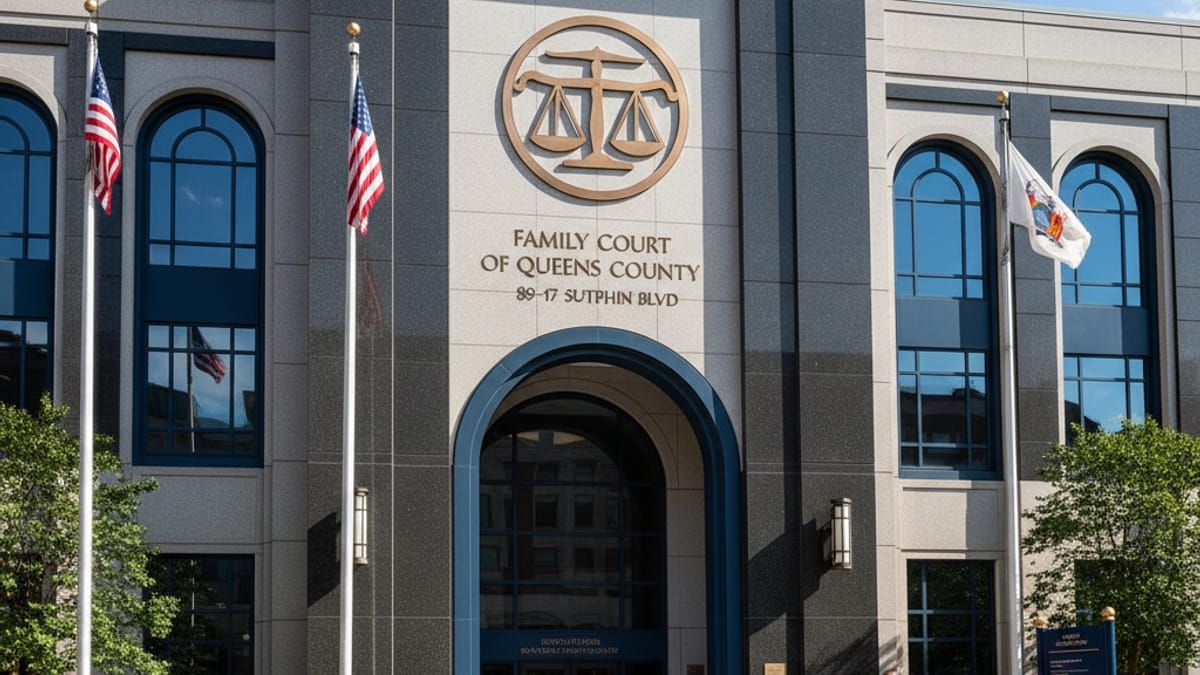
Queens County Family Court
Location
89-17 Sutphin Blvd, Jamaica, NY 11435
Accessible via multiple subway and bus lines serving Jamaica
Custody Court Procedures
Queens Family Court has specific local rules, filing requirements, and procedures that differ from other NYC family courts. Familiarity with these local practices is essential for effective representation.
Law Guardian Program
The court assigns attorneys for children in custody cases to represent the child's interests and make recommendations to the judge. Understanding how law guardians operate in Queens is crucial.
Supervised Visitation Facilities
When supervised visitation is ordered, knowing Queens-based supervised visitation centers and programs helps facilitate appropriate arrangements.
Why Local Attorney Familiarity Matters
Attorneys who regularly practice in Queens Family Court understand the individual judges' approaches to custody, the court's scheduling system, local mediation programs, and the most effective strategies for presenting custody cases.
If You or Your Children Are in Immediate Danger
Call 911 immediately if you or your children are in immediate danger.
For domestic violence resources and support: Contact the NYC Domestic Violence Hotline at 800-621-HOPE (4673) or text "HOPE" to 81336. Services are free, confidential, and available 24/7 in multiple languages.
Queens Neighborhoods We Serve
Connect with custody attorneys serving families throughout Queens County
Northwest Queens
- • Astoria
- • Long Island City
- • Sunnyside
- • Woodside
Central Queens
- • Jackson Heights
- • Elmhurst
- • Corona
- • Rego Park
- • Forest Hills
- • Kew Gardens
Northeast Queens
- • Flushing
- • Bayside
- • Whitestone
- • College Point
- • Fresh Meadows
Southeast Queens
- • Jamaica
- • Richmond Hill
- • Woodhaven
- • Howard Beach
- • Ozone Park
Serving all Queens neighborhoods and connecting families throughout Queens County with experienced custody attorneys
Frequently Asked Questions About Child Custody
Answers to common questions about custody in Queens
How is custody determined in New York?
New York courts determine custody based on the best interests of the child standard. Judges consider multiple factors including each parent's ability to care for the child, the child's relationship with each parent, stability of home environments, the child's school and community ties, any history of domestic violence, and the child's preferences if age-appropriate. There is no automatic preference for mothers or fathers - decisions are made on a case-by-case basis.
Can I get custody if I'm not married to the other parent?
Yes. Unmarried parents have the same custody rights as married parents in New York. However, if you are the child's father and were never married to the mother, you may need to establish paternity first (either through acknowledgment or court order) before seeking custody. Once paternity is established, the same best interests standard applies to custody determinations.
What if we disagree on where the child should go to school?
School choice disputes are common in Queens given the variety of public schools, specialized schools, and private school options. If you have joint legal custody, major educational decisions typically require agreement from both parents. If parents cannot agree, they may need to return to court where a judge will decide based on the child's best interests. This is why detailed decision-making provisions in custody orders are important - including whether Queens schools, specialized programs, or private schools are being considered.
How do I modify an existing custody order?
To modify a custody order, you must file a modification petition with Queens Family Court demonstrating that there has been a substantial change in circumstances since the original order was issued, and that the modification is in the child's best interests. Examples of substantial changes include relocation, job changes affecting availability, remarriage, health issues, changes in the child's needs, or concerns about the child's safety. The court will not modify custody based on minor changes or dissatisfaction with the original arrangement.
Can my child choose which parent to live with?
A child's preference is one factor the court considers, but it is not determinative. Generally, the older and more mature the child, the more weight their preference carries. However, judges recognize that children may be influenced by parents or not fully understand the implications of their choice. The judge will consider the reasons for the child's preference and whether it aligns with the child's best interests. The court ultimately makes the custody determination based on all relevant factors, not solely on the child's stated wishes.
What is a law guardian and what do they do?
A law guardian (also called attorney for the child) is a lawyer appointed by Queens Family Court to represent the child's interests in custody cases. The law guardian meets with the child, observes interactions with both parents, may visit both homes, and reports to the judge with recommendations about what custody arrangement would be in the child's best interests. While the law guardian's recommendation is not binding, judges give significant weight to their observations and conclusions because they provide an independent perspective focused solely on the child's welfare.
How long does a custody case take in Queens?
The timeline for custody cases in Queens varies widely depending on complexity and whether parents reach agreements. Emergency temporary custody orders can sometimes be obtained quickly when there are immediate safety concerns. If parents agree on custody arrangements, the case can be resolved in a few months. However, contested custody cases that proceed to trial typically take several months to over a year, depending on court scheduling, investigations, and the need for evaluations. The specific timeline depends on your individual circumstances. Attorneys you're matched with can provide more specific timeline estimates based on your situation and the current Queens Family Court calendar.
How much does a custody attorney cost?
Attorney fees for custody cases vary based on the complexity of the case, whether it's contested or agreed upon, and how long the case takes. Factors affecting cost include the amount of court appearances required, whether investigations or expert evaluations are needed, the complexity of custody issues, and whether trial is necessary. Some attorneys charge hourly rates while others may offer flat fees for specific services. The attorneys you're matched with will discuss their fees and payment arrangements during initial consultations. Queens Family Lawyers does not set, control, or receive any portion of attorney fees.
How to Get Started with a Queens Custody Attorney
Connect with a qualified custody attorney in four simple steps
Share Your Custody Situation
Complete a brief, confidential form sharing basic details about your custody situation and what you need help with
We Match You with Queens Attorneys
We connect you with experienced Queens custody attorneys familiar with Jamaica courthouse procedures and local judges
Attorneys Contact You Directly
A qualified custody attorney will reach out to discuss your case, answer questions, and explain their approach to protecting your parental rights
Choose Your Attorney
After your consultation, you decide whether to hire the attorney. You're under no obligation to proceed
Ready to Protect Your Parental Rights?
Connect with an experienced Queens custody attorney who understands the Jamaica courthouse and will fight for your parental rights and your child's best interests